
Building Materials for Jeddah's Climate: How to Choose the Right Materials for Your Villa
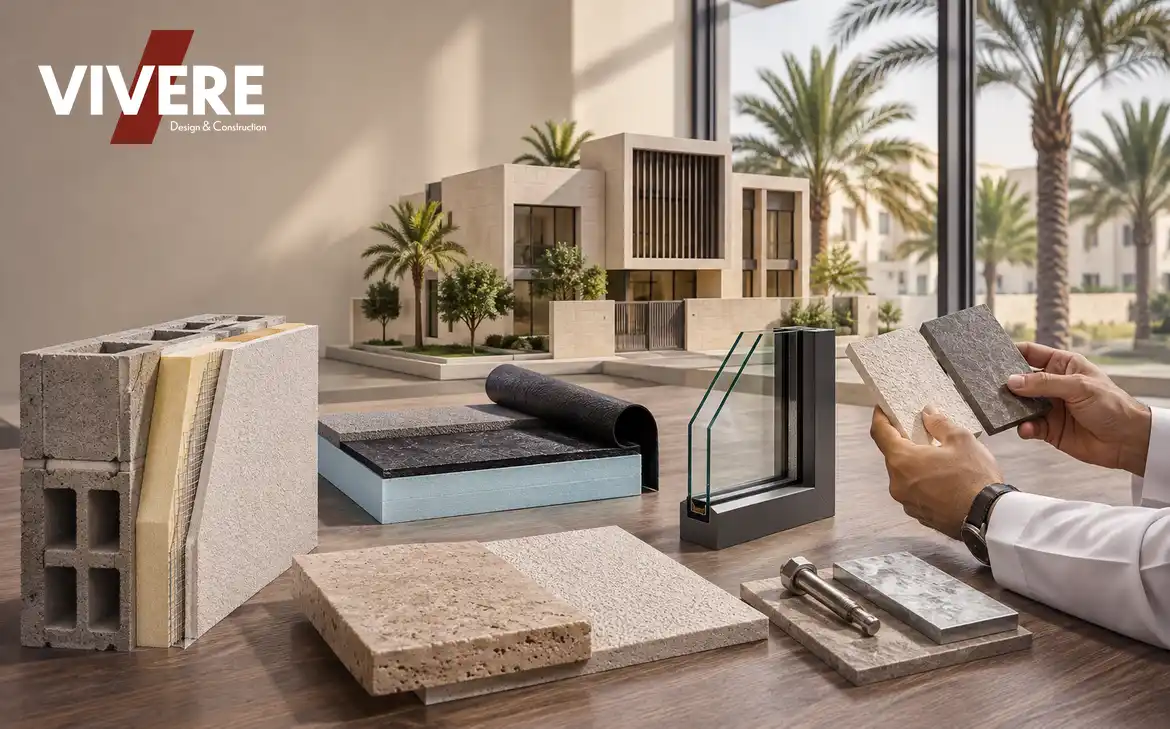
Many building problems in Jeddah do not become visible on the day a villa is handed over. They may appear two or three years later: peeling exterior paint, cracks in plaster, unexpectedly high electricity bills, or corrosion affecting exposed metal components.
These problems can have several causes, including unsuitable material selection, incompatible building systems, inadequate construction details, poor waterproofing, and insufficient maintenance. Choosing the right materials is therefore not enough on its own. They must be part of an integrated design and construction approach that responds to the site's environmental conditions.
Jeddah is different from inland Saudi cities. Its coastal location combines high temperatures for much of the year with humidity from the Red Sea. Some locations may also have saline soil or groundwater conditions that require additional engineering precautions.
For this reason, selecting building materials suitable for Jeddah's climate means considering more than heat resistance. Moisture protection, corrosion resistance, thermal performance, and the quality of installation are equally important.
In this guide, Vivere explains how to select materials for different parts of a villa, including foundations, walls, roofs, windows, facades, and interior finishes, along with common mistakes to avoid during construction.
Why Does Building in Jeddah Require Careful Material Selection?
Before discussing specific materials, it is important to understand the environmental conditions a building may face throughout its service life.
Four main factors should be considered:
1. High Temperatures for Much of the Year
Jeddah experiences high temperatures for extended periods. Maximum temperatures in July average around 39°C, making solar exposure an important consideration in building design.
External walls and roofs receive substantial solar radiation during the day. Heat transferred through the building envelope increases indoor cooling demand and can contribute to higher electricity consumption.
The choice of wall materials, roof insulation, glazing, and external shading therefore plays an important role in improving indoor thermal comfort.
2. High Humidity
Humidity is influenced by coastal air from the Red Sea and often becomes more pronounced toward the end of summer.
Moisture can affect paint systems, plaster, metal components, and insulation materials that absorb water. Poorly designed wall assemblies may also experience condensation when temperature and moisture conditions are not properly considered.
Material selection should therefore be accompanied by suitable moisture control, ventilation, waterproofing, and installation details.
3. Salts in Soil and Groundwater
Some locations in Jeddah, particularly coastal areas and low-lying sites with sabkha deposits, may have soil or groundwater containing elevated concentrations of salts, sulfates, and chlorides.
These conditions vary significantly from one plot to another. They cannot be assumed to exist throughout the entire city.
Sulfates may contribute to chemical deterioration of concrete, while chlorides can increase the risk of reinforcing steel corrosion. The actual exposure conditions should be established through geotechnical investigation and relevant chemical testing before foundation specifications are finalized.
4. Salt-Laden Coastal Air
Buildings close to the sea, including some areas of northern Jeddah and Obhur, may be exposed to airborne salt and coastal moisture.
This environment can accelerate corrosion in external metal components, including railings, fasteners, gates, exposed steelwork, and air-conditioning equipment.
The appropriate material protection depends on the distance from the coast, the degree of exposure, the component's location, and the maintenance requirements.
The right materials are therefore selected according to the specific role of each building element. No single material can independently provide thermal insulation, moisture protection, and corrosion resistance throughout the entire villa.
Building Materials Suitable for Jeddah's Climate: A Component-by-Component Guide
1. Foundations and Concrete: Protection Against Salts
Foundations are among the building elements that require careful consideration in locations exposed to aggressive soil or groundwater conditions. Problems affecting foundations can also be difficult and expensive to repair after construction.
The following materials and practices may be appropriate, depending on the actual site conditions:
- Start with a geotechnical investigation: Soil and groundwater testing helps identify sulfate and chloride concentrations, groundwater levels, and other ground conditions that influence foundation design and concrete specifications.
- Determine the exposure classification before selecting cement and concrete mix: Cement selection should not be based simply on describing a site as coastal or saline. The structural engineer should review the soil and groundwater test results and determine the relevant sulfate and chloride exposure classifications according to the applicable code and project requirements. This determines the appropriate cement type and concrete mix specifications.
- Use supplementary cementitious materials where appropriate: Materials such as ground granulated blast-furnace slag, pozzolanic materials, and silica fume may be incorporated into concrete mixes to improve performance under certain exposure conditions. Their selection and proportions should follow the concrete mix design and applicable specifications rather than a general recommendation for every site.
- Specify low-permeability concrete: Appropriate control of the water-to-cementitious-material ratio, adequate concrete cover over reinforcement, proper compaction, and suitable curing all contribute to concrete durability.
- Provide suitable foundation waterproofing: The waterproofing and protection system should be selected according to groundwater levels, soil conditions, and the site's exposure. Particular attention should be given to joints, construction interfaces, and details where water may penetrate.
- Consider additional reinforcement protection where necessary: In locations with demanding exposure conditions, additional measures such as epoxy-coated reinforcement or other approved corrosion-protection systems may be considered when supported by the engineering design.
The key principle is that foundation durability depends on a complete design approach, not simply on choosing sulfate-resistant cement.
2. External Walls: Selecting Materials for Better Thermal Performance
Standard concrete blocks can transfer heat relatively easily. For this reason, external walls in Jeddah generally require an appropriate insulation strategy to meet the project's thermal performance requirements.
Several wall systems may be considered:
- Insulated concrete blocks: These are one of the options used in external walls. Their thermal performance depends on the insulation type, thickness, density, and installation quality. The complete wall assembly should be evaluated rather than relying on the block description alone.
- Autoclaved Aerated Concrete (AAC): AAC is a lightweight masonry material with useful thermal insulation properties. Its lower weight can also reduce structural loads. However, it requires compatible adhesives, plaster, and appropriate installation details.
- Double-wall systems: A double-wall assembly with an insulation layer between the walls can provide effective thermal performance when correctly designed and installed. It may be particularly useful for external walls with greater solar exposure.
An equally important consideration is the treatment of thermal bridges. Concrete columns, beams, slab edges, and wall openings can transfer heat into the building even when insulated blocks are used.
For this reason, insulation continuity should be addressed at wall-to-column connections, beams, slab edges, and window openings. Selecting an insulated block alone does not guarantee that the entire wall system will perform effectively.
3. Roofs: Protecting the Building from Solar Heat
The roof receives substantial solar exposure throughout the day and is one of the most important areas to consider when improving a villa's thermal performance.
A suitable roof assembly usually requires an integrated system rather than a single insulation product.
Important components may include:
- Waterproofing: Bituminous membranes or liquid-applied waterproofing systems may be used, provided that the roof is properly designed with adequate slopes toward the drainage points.
- Thermal insulation using Extruded Polystyrene (XPS): XPS generally has lower water absorption than conventional expanded polystyrene products and can be suitable for certain roof insulation applications. Spray-applied polyurethane insulation is another option, depending on the system requirements and installation conditions.
- Inverted roof systems: In this arrangement, the thermal insulation is installed above the waterproofing membrane, protecting the waterproofing layer from direct exposure to sunlight and temperature fluctuations. The complete assembly must include suitable protective layers and drainage details.
- Light-colored finishing layers: Appropriate light-colored tiles or reflective roof coatings can help reduce solar heat absorption, depending on their surface properties and maintenance.
The effectiveness of roof insulation depends not only on the insulation material but also on the continuity of the system, drainage, waterproofing details, and installation quality.
4. Windows and Glazing: Controlling Solar Heat Gain
Large windows are common in contemporary villa designs, but glazing can also be a significant source of solar heat gain.
Several features should be considered when selecting windows for Jeddah's climate:
- Double glazing: Two panes of glass separated by an air or gas-filled cavity can help reduce heat transfer compared with conventional single glazing.
- Low-E coatings: Low-emissivity coatings can reduce the transfer of certain forms of thermal radiation while maintaining useful levels of natural daylight, depending on the selected glazing configuration.
- Thermally broken aluminum frames or uPVC frames: Thermal breaks help reduce heat transfer through aluminum frames. Proper sealing is also important to limit air and dust infiltration.
- External shading: Overhangs, screens, louvers, and other shading elements should be considered during the architectural design stage, based on the orientation of each facade.
Window performance should be assessed using relevant indicators, including:
- U-Factor: Measures the rate of heat transfer through the window assembly.
- Solar Heat Gain Coefficient (SHGC): Indicates how much solar heat passes through the glazing.
- Visible Light Transmittance (VLT): Indicates the amount of visible daylight passing through the glass.
These factors help the design team balance reduced solar heat gain with sufficient natural daylight and visual comfort.
5. Exterior Facades: Materials That Withstand Moisture and Salt Exposure
Facade material selection in Jeddah should consider both architectural appearance and long-term performance under local environmental conditions.
Possible materials include:
- Natural stone: A durable facade material when the selected stone has suitable absorption characteristics and is installed using an appropriate fixing system. Mechanical anchors, such as suitably specified stainless-steel fixings, may be required depending on the stone, panel size, and exposure conditions.
- Porcelain and suitable exterior cladding systems: Certain porcelain products have low water absorption and can provide durable exterior finishes when correctly specified and installed. Cladding systems should be selected according to their weather resistance, fixing requirements, and manufacturer specifications.
- Glass Fiber Reinforced Concrete (GRC): GRC can be used for architectural shapes, decorative elements, and facade features. Its suitability depends on the component design, reinforcement details, fixing system, and manufacturing quality.
- Exterior paint systems: Flexible exterior coatings with suitable resistance to ultraviolet radiation and moisture can help protect facade surfaces. The correct primer and surface preparation are essential.
- Light-colored facade finishes: Light colors can reflect a greater proportion of solar radiation than darker finishes, potentially reducing heat absorption across large exposed surfaces.
If you are planning the exterior appearance of your villa, read our guide to villa facade design in Jeddah for more information about facade styles and material choices.
6. External Metals: Reducing Corrosion Risks
Metal components exposed to coastal conditions may corrode more quickly if their material grade and protective coating are not suitable.
Possible options include:
- Grade 316 stainless steel: Often considered for railings, fasteners, and fixtures in coastal environments because it generally offers better resistance to chloride exposure than Grade 304. Actual suitability depends on the level of exposure, component design, and maintenance.
- Hot-dip galvanized steel: Provides a protective zinc coating for steel gates, canopies, and other external components. A compatible finishing paint system may provide additional protection where required.
- Powder-coated or anodized aluminum: Can be suitable for lightweight exterior elements, provided that the coating specification, surface preparation, and installation details are appropriate for the environment.
Material selection should also consider connections between different metals, water traps, drainage, and access for future maintenance.
7. Plastering and Interior Moisture Protection
Interior finishes also require careful selection, particularly in kitchens, bathrooms, and areas exposed to moisture.
Suitable practices and materials may include:
- Cement-based plaster with appropriate additives: Selected products and application methods can help manage cracking associated with rapid drying. Reinforcement mesh may also be required at junctions between concrete and masonry, according to the specification.
- Waterproofing for bathrooms and kitchens: Wet areas should receive an appropriate waterproofing system before tiling. Particular attention should be given to floor-to-wall junctions, pipe penetrations, and drainage details.
- Moisture-resistant gypsum board: This may be suitable for suspended ceilings and certain interior applications in areas exposed to occasional moisture. However, moisture-resistant gypsum board is not waterproof and should not be treated as a substitute for suitable waterproofing in areas exposed to direct water.
It is also important to investigate the cause of persistent dampness or salt deposits before applying paint or finishing materials. Surfaces should be treated, cleaned, and properly prepared according to the selected manufacturer's system. Applying primer or paint directly over active moisture or salt deposits will not solve the underlying problem.
What Does the Saudi Building Code Require for Insulation?
The Saudi Residential Energy Conservation Code (SBC 602) establishes minimum energy-efficiency requirements for residential buildings of up to three stories. It covers the building envelope, air-conditioning and ventilation systems, and other elements related to energy consumption.
Thermal insulation requirements apply to the external building envelope, including roofs, external walls, windows, and exterior doors.
This means that selecting a suitable insulation product is only part of the process. The complete building envelope must be designed to achieve the required thermal performance according to the applicable code and approved specifications.
In practical terms, the selection of blocks, insulation thicknesses, glazing types, and window frames should be supported by engineering calculations and verified product performance data rather than relying solely on supplier or contractor recommendations.
The applicable code edition and the relevant authority's requirements should always be checked when preparing project documentation and building permit submissions.
Common Mistakes When Selecting Building Materials in Jeddah
Even when suitable materials are available, poor decisions during procurement and construction can reduce their performance.
Common mistakes include:
- Starting foundation work without a soil investigation: This may result in unsuitable concrete or foundation specifications for the actual ground conditions.
- Comparing materials by price alone: A lower initial purchase price may result in higher maintenance or operating costs over the building's service life.
- Purchasing good insulation but installing it incorrectly: Gaps between insulation boards, poorly sealed joints, and untreated thermal bridges can reduce the system's effectiveness.
- Storing cement and insulation materials improperly: Exposure to moisture, direct sunlight, or unsuitable site conditions can damage materials before installation.
- Using ordinary metals in highly exposed coastal locations: Unsuitable metal grades or protective coatings can lead to premature corrosion.
- Changing specified materials during construction without engineering approval: A product described as an equivalent replacement may have different performance characteristics and may not meet the original design requirements.
The material specification, approved product data, and installation method should be considered together before any substitution is accepted.
The Role of an Engineering Consultancy in Selecting Materials for Your Villa
Choosing materials suitable for Jeddah's climate begins during the design stage, not after construction has started.
At Vivere, material selection and technical coordination can be addressed through three main stages, according to the agreed scope of services:
1. During Design
Material systems and performance requirements can be incorporated into architectural drawings, technical specifications, and bills of quantities where these are included in the project scope. Selection should consider the geotechnical report, applicable building codes, and the location of the plot.
2. Before Procurement
Material samples, product data sheets, and relevant technical certificates can be reviewed against the project's specifications before procurement and installation.
3. During Construction
The engineering supervision team can monitor installation quality, review test results issued by qualified laboratories or specialist testing providers, and check that waterproofing and other technical systems are installed according to the approved drawings and specifications.
Depending on the agreed supervision scope, this may include reviewing concrete test results and checking waterproofing systems before they are covered by subsequent construction layers.
For more information about the responsibilities of the engineering office and contractor, read our guide to engineering office and contractor responsibilities.
If you are looking for architectural design and engineering supervision services for your villa, explore Vivere's architectural design services.
Frequently Asked Questions About Building Materials for Jeddah's Climate
What is the best type of block for villas in Jeddah?
Insulated concrete blocks, Autoclaved Aerated Concrete (AAC), and double-wall systems with insulation are among the options that may be considered for external walls. The most suitable choice depends on thermal performance, wall thickness, structural requirements, installation quality, and the applicable code requirements.
Standard concrete blocks may still be used for internal partitions where appropriate.
Is thermal insulation mandatory for villas in Jeddah?
Thermal insulation is part of the requirements of the Saudi Building Code for applicable new buildings. The required performance applies to relevant elements of the building envelope, including external walls, roofs, windows, and exterior doors.
The specific requirements should be verified against the code edition and project classification applicable to the building.
What type of cement is suitable for foundations in Jeddah?
The choice depends on the actual soil and groundwater conditions. Where high sulfate exposure is identified, sulfate-resistant cement or an appropriately specified blended cement may be required.
The structural engineer should determine the suitable cement type and concrete mix based on the geotechnical investigation, exposure classification, and applicable specifications.
Do suitable building materials increase construction costs?
Some higher-performance materials and insulation systems may increase initial construction costs. However, their benefits may include improved thermal comfort, lower cooling demand, greater durability, and reduced maintenance requirements.
The overall financial impact depends on the selected system, installation quality, building design, and actual operating conditions.
For a broader understanding of construction budgets, read our guide to villa construction costs in Jeddah.
Do building materials need to change if a villa is close to the sea?
Yes, coastal exposure may require additional attention to material durability and corrosion protection.
Foundations may need suitable concrete and waterproofing specifications based on site investigations, while external metals, fasteners, and coatings should be selected according to their exposure to airborne salts and moisture.
The specific requirements depend on the plot's location and actual environmental conditions.
Start Your Villa with the Right Materials
Building materials suitable for Jeddah's climate can help protect a villa against moisture-related damage, corrosion, excessive heat transfer, and avoidable maintenance problems. However, their performance depends on correct specification, coordinated design, and proper installation.
The right decisions begin with understanding the plot, reviewing its ground conditions, selecting suitable building systems, and ensuring that the materials are installed according to the approved technical requirements.
If you are planning to build a villa in Jeddah, contact the Vivere team to discuss your project requirements, from site and design considerations to material coordination and engineering supervision within the agreed scope of services.